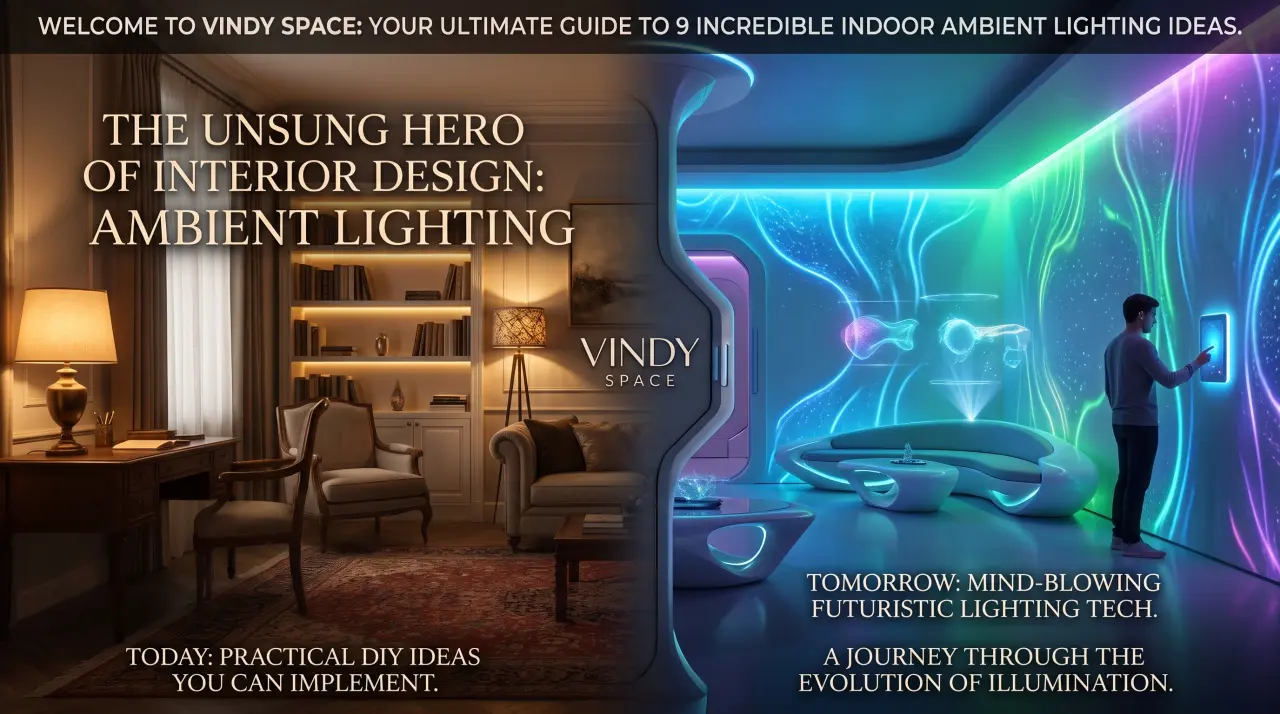
Lighting is the ultimate unsung hero of interior design. You can curate the most expensive furniture, the rarest vintage Persian rugs, and the most stunning architectural features, but if your home is solely illuminated by harsh, blinding overhead lights, the magic is instantly lost. True luxury is found in ambient lighting—the art of controlling shadows, softening corners, and creating a deeply immersive, mood-altering atmosphere that shifts the entire psychology of a room.
While the concept of ambient lighting has been around for decades, we are currently standing on the edge of a massive technological revolution. The days of simply plugging in a warm desk lamp are ending. Welcome to Vindy Space! Today, we are taking you on a journey through the evolution of illumination. We will start with the highly practical, trending DIY ideas you can implement this weekend to elevate your current space, and then dive deep into the mind-blowing, futuristic lighting technology that is about to change interior design forever. Whether you want a cozy cinematic glow or a bioluminescent sci-fi sanctuary, here is your ultimate guide to 9 incredible indoor ambient lighting ideas.
Key Takeaways
- Instantly elevate everyday furniture and screens with budget-friendly, practical DIY bias lighting to reduce eye strain and create architectural illusions.
- Transform static rooms into dynamic, living environments by incorporating futuristic, interactive kinetic light walls and magnetic levitation decor.
- Prepare for the hyper-sustainable future of design with biophilic illumination, utilizing self-sustaining bioluminescent algae and smart electrochromic privacy glass.
Table of Contents
- 1. Cinematic Bias Lighting for Screens (Practical)
- 2. The "Floating" Furniture Glow (Practical)
- 3. Biophilic Plant Uplighting (Practical)
- 4. Fiber-Optic Starscape Ceilings (Futuristic)
- 5. Kinetic & Interactive Light Walls (Futuristic)
- 6. Holographic Ambient Window Projections (Futuristic)
- 7. Smart Electrochromic Privacy Glass (Futuristic)
- 8. Magnetic Levitation Accent Lamps (Futuristic)
- 9. Bioluminescent Living Algae Tubes (Futuristic)
1. Cinematic Bias Lighting for Screens (Practical)
Dynamic Screen Halos | Cinematic Contrast Boost
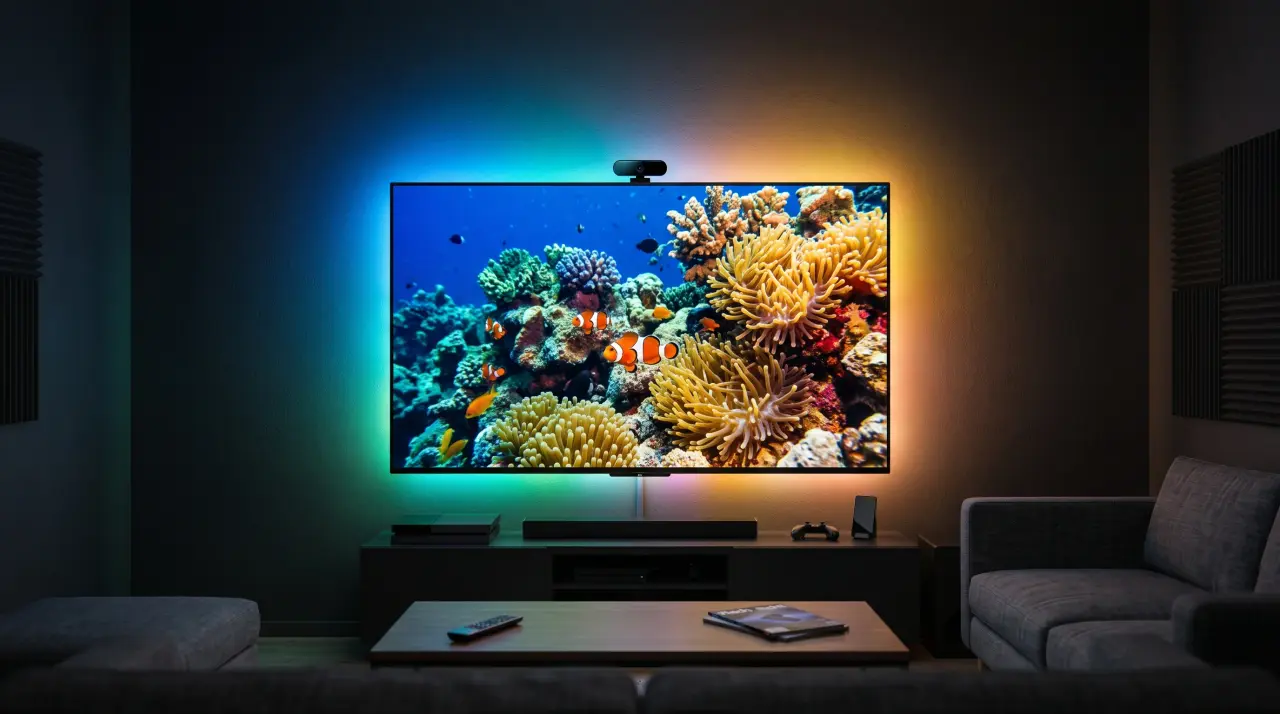
- Why it Works: Staring at a bright television or monitor in a dark room causes significant eye strain and flattens the visual experience. "Bias lighting" is a professional home theater technique that solves this while making your living room look like a high-end tech studio. Placing a light source behind a screen increases the perceived contrast of the picture, making blacks look deeper and colors look richer. Psychologically, it creates a gentle transition for your eyes between the blinding screen and the dark room, reducing fatigue and making the space feel incredibly cinematic and immersive.
- How to Style: Create a dynamic, glowing halo of light radiating from behind your television or monitor. Wash the wall in a soft, colored glow that matches the action on the screen. Invest in a smart RGB LED light strip equipped with a color-sync camera (brands like Govee or Philips Hue). Mount the strip to the back of your TV and place the tiny camera looking at the screen. The system reads the colors of the movie or game and projects those exact colors onto the wall in real-time.
✔ Significantly reduces eye strain when watching movies in a pitch-black room.
✔ Instantly upgrades a standard living room into a dynamic, immersive home theater.
✖ The color-sync camera must stick out visibly from the top or bottom of the TV screen.
📝 Quick Steps: Wipe the back perimeter of your TV or monitor with rubbing alcohol. Adhere the smart RGB LED strip along the back edge of the screen. Mount the color-sync camera to the center top or bottom edge of the TV. Calibrate the system using the brand's smartphone app.
🛠️ Tools & Materials: Lighting: Smart RGB LED TV backlight kit with color-sync camera. Tools: Rubbing alcohol, microfiber cloth.
🧽 Maintenance: Occasionally wipe the tiny lens of the color-sync camera with a microfiber cloth; if it gets dusty, the wall colors will not match the screen accurately.
⚠️ Safety & Building Codes: Ensure you are plugging the LED light power adapter into a high-quality surge protector, as sudden power spikes can easily fry the delicate color-sync processor.
💡 Pro Tip: If you hate the look of the little camera sitting on top of your TV, mount it discreetly to the bottom center edge of the screen facing upward; it works exactly the same!
🚧 Contractor's Insight / Structural Note: When adhering LED strips to the back of a TV, clean the plastic thoroughly with rubbing alcohol first. TVs generate a massive amount of heat, and if the surface is dusty, the adhesive backing on the lights will melt and peel off within a week.
Shop the Look
2. The "Floating" Furniture Glow (Practical)
Illuminated Toe-Kicks | Weightless Architectural Illusions
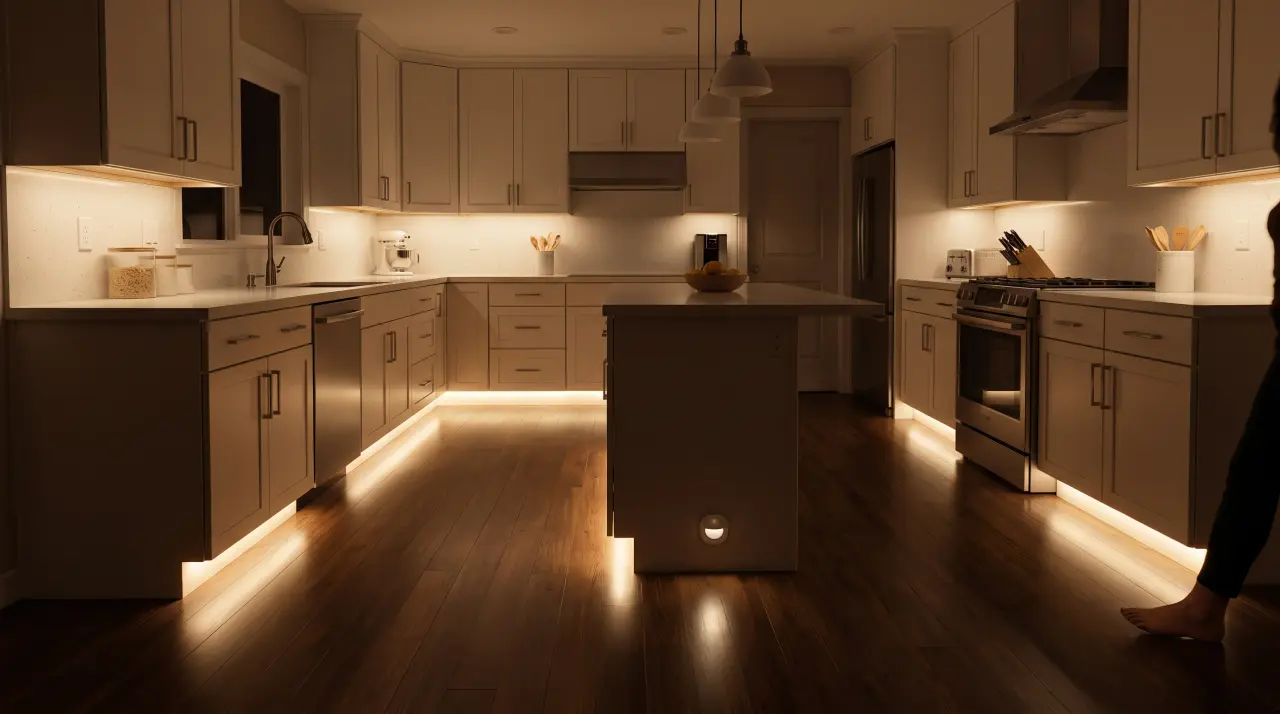
- Why it Works: Heavy cabinetry and solid furniture can make a room feel smaller and heavily grounded. By adding ambient light to the absolute bottom edges of your furniture, you completely alter the visual weight of the space. This trick uses negative space and shadows to trick the eye. By illuminating the dark crevices where furniture meets the floor, you eliminate harsh shadows and create a sense of expansive, floating architecture. It instantly elevates standard furniture to look like expensive, custom-built installations.
- How to Style: Create a continuous, warm ribbon of light glowing from underneath your kitchen base cabinets (the toe-kick area), your bathroom vanity, or even your bed frame. This creates the optical illusion that the heavy furniture is hovering. This is an incredibly budget-friendly weekend project. Purchase a roll of warm-white (2700K) LED strip lights and mount them facing downward on the underside of your cabinets or bed rails.
✔ Makes heavy, bulky furniture look weightless and highly architectural.
✔ Provides an incredibly soft, safe pathway light for navigating the house at night.
✖ Routing the power cord from underneath the bed to a wall outlet seamlessly can be tricky.
📝 Quick Steps: Measure the perimeter underneath your bed frame or kitchen toe-kicks. Attach aluminum LED mounting channels using small wood screws. Stick the warm-white LED strips inside the channels and snap on the diffuser covers. Connect the lights to a smart motion sensor or smart plug.
🛠️ Tools & Materials: Lighting: Warm-white (2700K) LED strip lights, smart motion sensor. Hardware: Aluminum LED mounting channels with frosted diffuser covers.
🧽 Maintenance: Keep the floor underneath the floating furniture meticulously vacuumed, as the bright downward light will perfectly highlight every single dust bunny and pet hair on the floor.
⚠️ Safety & Building Codes: When running LED strips under kitchen cabinets, ensure the power adapter is plugged into a GFCI-protected outlet if it is located anywhere near a sink or water source.
💡 Pro Tip: Connect these specific strips to a smart motion sensor. When you walk into the kitchen or bathroom late at night, a soft, magical pathway illuminates automatically without blinding you with overhead lights.
🚧 Contractor's Insight / Structural Note: When mounting LED strips under kitchen cabinets or bed frames, always use a continuous aluminum channel with a frosted diffuser. This protects the delicate diodes from being kicked, keeps the light smooth, and prevents the adhesive from peeling off the wood.
Shop the Look
3. Biophilic Plant Uplighting (Practical)
Dramatic Leaf Shadows | Jungle Canvas Walls
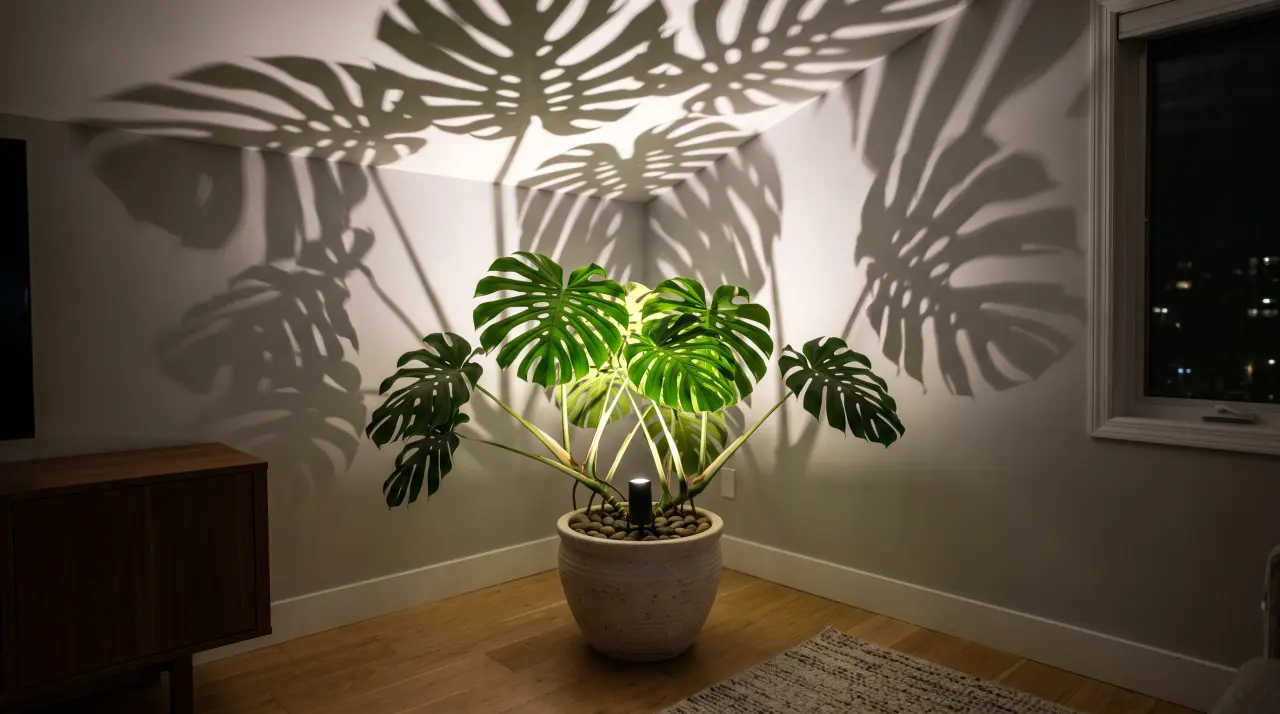
- Why it Works: Indoor jungles are trending, but when the sun goes down, your beautiful, expensive houseplants disappear into the shadows, turning into dark, unreadable blobs in the corner of your room. Uplighting highlights the natural, organic architecture of plant leaves. Instead of just being a plant, it becomes a dynamic piece of natural art. The shadows projected onto the ceiling make standard rooms feel taller and infinitely more atmospheric, perfectly blending modern lighting with biophilic (nature-inspired) design.
- How to Style: Feature large, structural indoor plants (like a Monstera Deliciosa or a tall Bird of Paradise) illuminated from the base. Cast massive, intricate, jungle-like shadows onto your ceiling and walls. Purchase a small, plug-in or battery-operated directional LED spotlight. Hide the fixture directly inside the plant pot, covering the base slightly with decorative pebbles or Spanish moss. Aim the beam straight up through the leaves.
✔ Turns an ordinary houseplant into a massive, dramatic piece of glowing modern art.
✔ Projects intricate shadow patterns that visually raise the ceiling height of the room.
✖ The effect is severely diminished if the plant has small, messy, or chaotic leaves.
📝 Quick Steps: Select a large, structural plant with broad, distinct leaves. Place a small, waterproof LED spotlight directly on the soil inside the pot. Angle the beam straight up through the center of the foliage. Camouflage the light housing with dry Spanish moss or decorative stones.
🛠️ Tools & Materials: Lighting: Small, waterproof plug-in or battery-operated LED spotlight. Decor: Large structural plant, Spanish moss, or decorative pebbles.
🧽 Maintenance: Wipe the broad leaves of your plant with a damp cloth monthly. If the leaves are covered in a thick layer of dust, they will not cast sharp, distinct shadows on the ceiling.
⚠️ Safety & Building Codes: Never use traditional, hot halogen bulbs to uplight a plant. The extreme heat from the bulb will literally cook the leaves and potentially ignite dry soil coverings like peat moss. Always use cool-running LEDs.
💡 Pro Tip: Use a slightly cooler light (around 4000K) for plants. It makes the greens look much more vibrant and lush at night compared to very yellow, warm light.
🚧 Contractor's Insight / Structural Note: If placing a plug-in spotlight inside a large indoor plant pot, you must ensure the light fixture is rated for outdoor/wet use (IP65). Otherwise, the moment you water your plant, you will short-circuit the light and create a severe electrical hazard.
Shop the Look
4. Fiber-Optic Starscape Ceilings (Futuristic)
Microscopic Constellations | Acoustic Night Sky Canopies
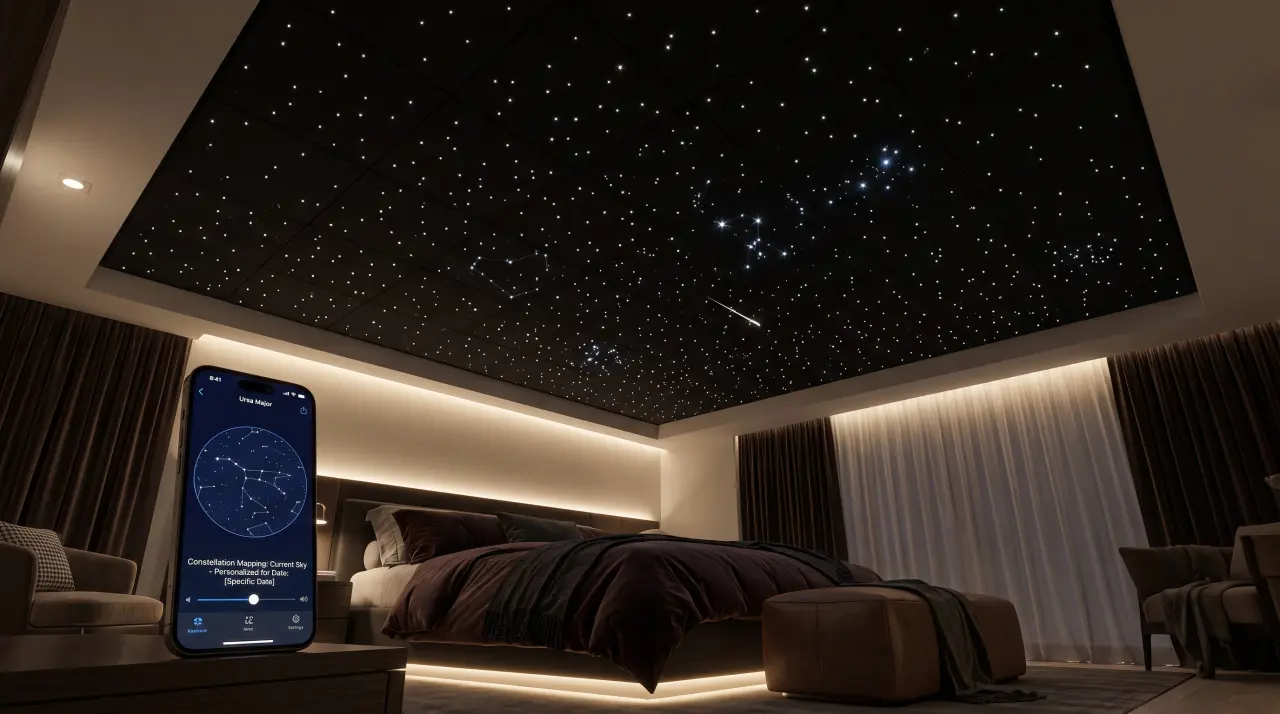
- Why it Works: We are moving beyond cheap galaxy projectors that sit on a nightstand. The future of luxury ambient lighting involves bringing the actual night sky permanently into your architecture. Humans have an innate psychological connection to the night sky. Sleeping or relaxing under a realistic starscape lowers heart rates and induces deep relaxation. It completely blurs the boundary between the indoors and the outdoors, creating the ultimate luxurious escape.
- How to Style: Create a ceiling that looks identical to a clear, unpolluted night sky. Feature hundreds of tiny, individual pinpricks of light that twinkle, change color, and can even be programmed to shoot like meteors across the room. This requires installing a specialized acoustic ceiling panel system (or a drop ceiling) embedded with thousands of microscopic fiber-optic cables. These cables run back to a hidden LED light engine.
✔ The absolute pinnacle of luxury, immersive ambient home theater lighting.
✔ Induces profound psychological relaxation by mimicking the natural night sky.
✖ Exorbitantly expensive and incredibly labor-intensive to install properly.
📝 Quick Steps: Build a rigid wooden framework or drop ceiling framework below the existing drywall. Drill hundreds of tiny, random pinholes through the new ceiling panels (e.g., MDF or acoustic foam). Thread individual fiber-optic strands through every single hole, gluing them in place. Bundle all the strands together and connect them to the main LED light engine hidden in a closet or bulkhead.
🛠️ Tools & Materials: Lighting: Fiber-optic star ceiling light engine kit with thousands of strands. Materials: MDF panels or acoustic ceiling tiles, spray adhesive, black velvet fabric (optional).
🧽 Maintenance: The fiber-optic strands themselves require zero maintenance, as they emit no heat and cannot burn out. Simply dust the ceiling panels gently with a microfiber duster.
⚠️ Safety & Building Codes: Ensure the hidden LED light engine is placed in an accessible location with plenty of ventilation, as the engine requires a cooling fan to dissipate heat.
💡 Pro Tip: Many high-end installers can program the fiber-optic engine to recreate the exact constellation alignment of your birth date, providing a breathtaking, deeply personalized ambient glow.
🚧 Contractor's Insight / Structural Note: Installing a fiber-optic ceiling requires lowering the existing ceiling by at least 3 to 6 inches to accommodate a new drop ceiling or acoustic framework where the thousands of delicate fiber strands can be routed back to the main light engine without being crushed.
Shop the Look
5. Kinetic & Interactive Light Walls (Futuristic)
Haptic Sensory Panels | Living Geometric Art
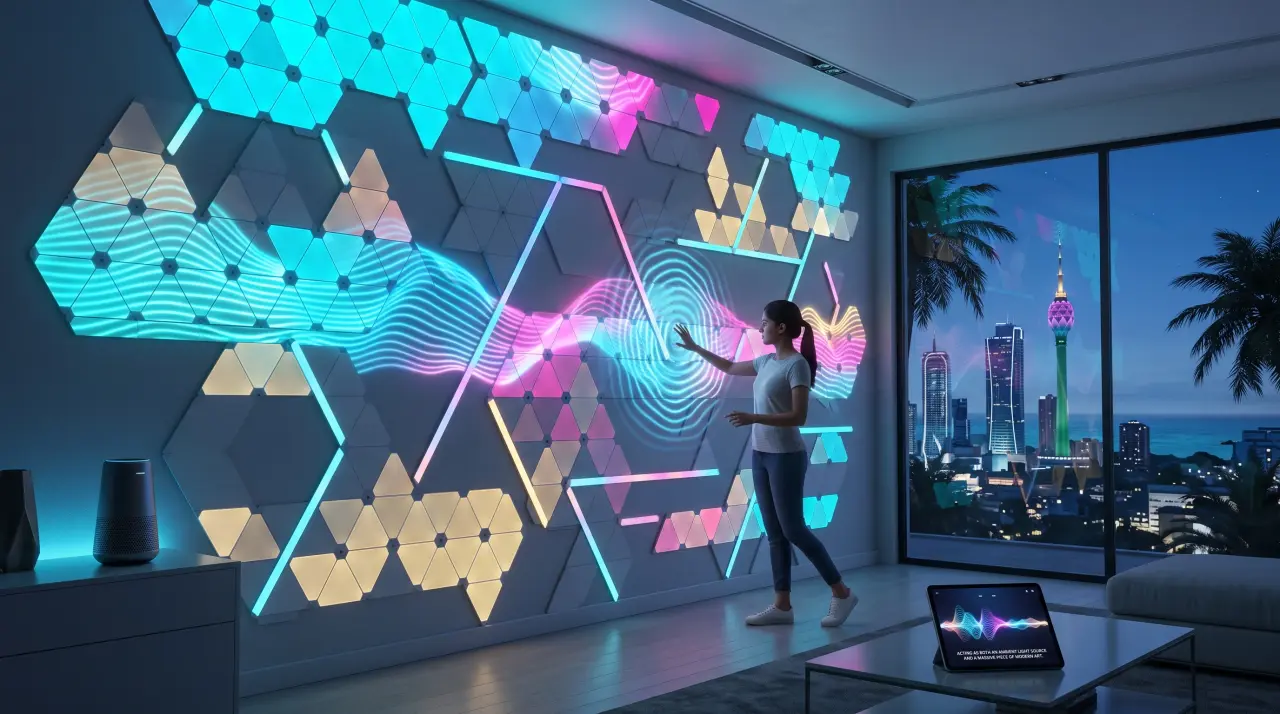
- Why it Works: Static lighting is becoming a thing of the past. The future of interior design is kinetic—environments that physically respond to your presence, mood, and movement. Interactive lighting turns a static room into a living organism. It engages the senses and makes the space feel highly intuitive and personalized. It blurs the line between functional room lighting and an interactive, modern art museum installation.
- How to Style: Design a stunning, geometric wall installation where the light moves, ripples, and changes color as you walk past it, mimicking a stone dropping into a glowing pond. These modular light panels (like advanced versions of Nanoleaf) are equipped with advanced proximity sensors and haptic feedback loops. When you enter the room, the wall detects your body heat and movement, sending gentle waves of ambient light tracing your path.
✔ Turns an ordinary blank wall into an interactive, museum-quality art installation.
✔ Responds dynamically to music, movement, and touch for a highly immersive experience.
✖ The heavy reliance on apps and Wi-Fi means they will not function if your home network goes down.
📝 Quick Steps: Plan the geometric shape of the panels on the floor before sticking anything to the wall. Map the power routing so the main cable can drop cleanly to the nearest outlet. Use heavy-duty, damage-free command strips to mount the modular panels to the wall one by one. Sync the panels to the dedicated smart app to program the interactive light waves.
🛠️ Tools & Materials: Lighting: Modular kinetic smart light panels (Nanoleaf or Govee). Accessories: Damage-free mounting strips, in-wall cable management kit.
🧽 Maintenance: Wipe the smooth acrylic faces of the light panels with a dry microfiber cloth to remove dust and fingerprints, as the glowing light will highlight any smudges.
⚠️ Safety & Building Codes: Do not mount heavy, interconnected panels directly over a bed or seating area using only weak adhesive strips. Always use the mechanical screw-mount brackets provided for overhead safety.
💡 Pro Tip: Install these panels in transition spaces like hallways or entryways rather than bedrooms, as kinetic movement can be distracting when you are trying to wind down to sleep.
🚧 Contractor's Insight / Structural Note: To achieve a truly futuristic, seamless look with massive smart lighting panels, you must install an in-wall cable management kit. Running a thick white power cable down the center of the wall to an outlet completely destroys the high-tech illusion.
Shop the Look
6. Holographic Ambient Window Projections (Futuristic)
4K Artificial Vistas | Dynamic Environmental Lighting
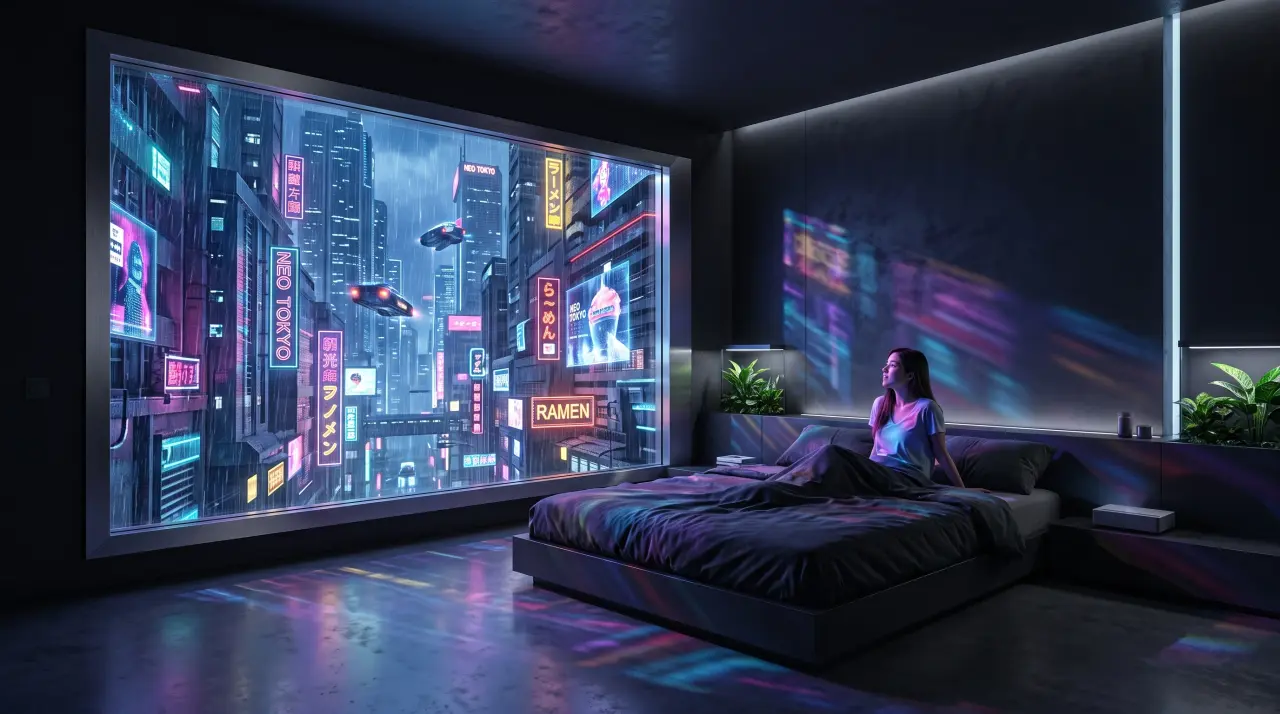
- Why it Works: Not every room has a spectacular view. In dense cities or basement apartments, a lack of windows can feel incredibly claustrophobic. Holographic lighting completely eliminates this physical limitation. Our brains crave natural vistas. By projecting a hyper-realistic outdoor scene, you eliminate feelings of confinement. More importantly, the projection acts as a massive ambient light source. If you project a deep underwater coral reef, your entire room will organically glow with rippling, aquatic blue light.
- How to Style: Create what appears to be a sleek, modern glass window on a blank wall. It is actually a hyper-realistic, 4K holographic projection displaying a moving, dynamic landscape. Using ultra-short-throw laser projectors and specialized nano-coated glass panels mounted to the wall, you can project an ambient environment that perfectly mimics reality, complete with corresponding ambient lighting.
✔ Instantly cures claustrophobia in windowless rooms or gloomy basements.
✔ The projection acts as a massive, dynamic, room-filling ambient light source.
✖ The high-end laser projectors required to make this look realistic are exceptionally expensive.
📝 Quick Steps: Frame a section of the wall using real architectural window trim to sell the illusion. Mount a specialized ambient light rejecting (ALR) projector screen tightly inside the window frame. Place a 4K ultra-short-throw laser projector on a low shelf directly beneath the "window." Load dynamic 4K nature vistas (like a snowy mountain or tropical beach) on loop.
🛠️ Tools & Materials: Tech: 4K ultra-short-throw laser projector, Ambient Light Rejecting (ALR) fixed frame screen. Materials: Architectural window trim, heavy-duty projector shelf.
🧽 Maintenance: Ensure the vents of the laser projector are kept completely free of dust, and never block the airflow, or the expensive laser engine will quickly overheat and burn out.
⚠️ Safety & Building Codes: Laser projectors emit incredibly powerful, concentrated beams of light. Never look directly into the projector lens from above, as it can cause instantaneous, severe eye damage.
💡 Pro Tip: Pair this visual tech with a smart soundbar playing corresponding ambient audio (like rain or ocean waves) for a full 4D sensory experience.
🚧 Contractor's Insight / Structural Note: Ultra-short-throw laser projectors generate a massive amount of heat and require precise alignment. The projector must be mounted on a rock-solid, perfectly level custom shelf built directly beneath the projection glass, or the "window" illusion will be visibly warped and tilted.
Shop the Look
7. Smart Electrochromic Privacy Glass (Futuristic)
Liquid Crystal Opacity | Glowing Architectural Softboxes
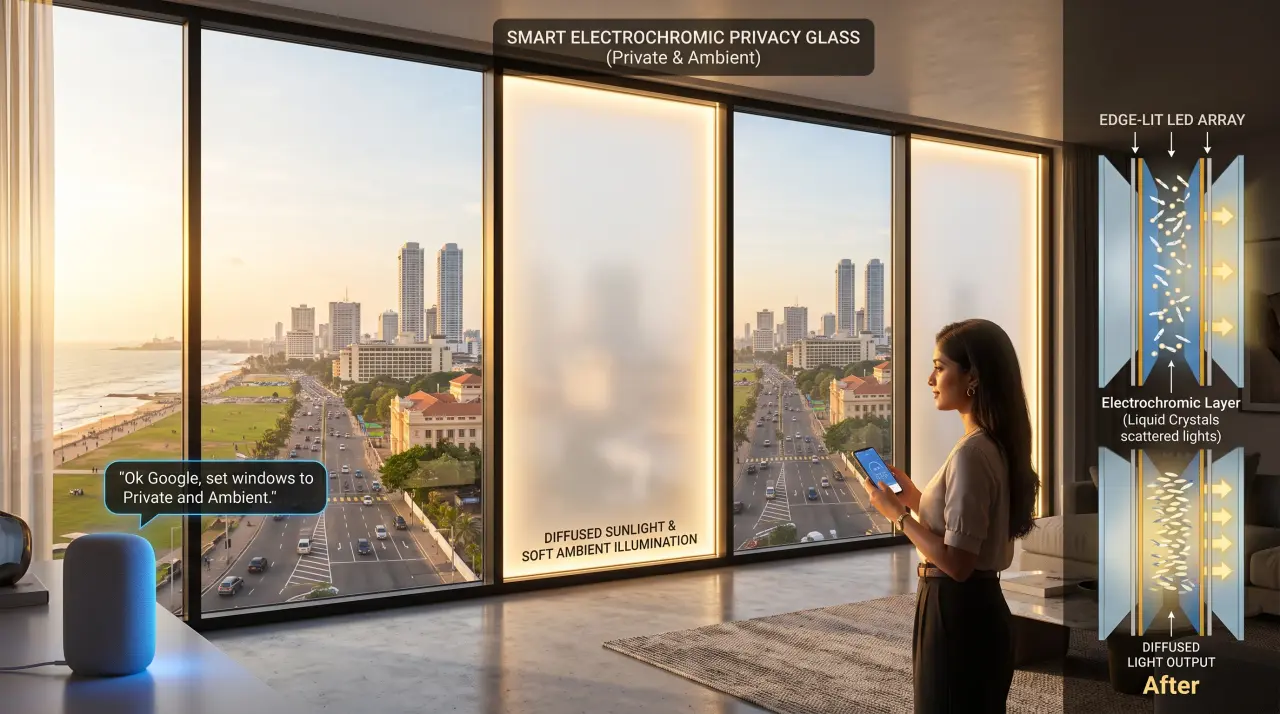
- Why it Works: Curtains and blinds are functional, but they block light completely and gather dust. The future of window treatments is glass that alters its own physical state to provide both privacy and ambient illumination. It maintains ultimate privacy while turning your actual windows into massive, glowing softboxes. It eliminates the need for heavy drapery, keeping modern spaces looking incredibly sleek and minimalist while still providing beautiful ambient light.
- How to Style: With a simple voice command, a crystal-clear window instantly transitions into a glowing, frosted, opaque panel that radiates soft, diffused light into the room. Electrochromic glass contains microscopic layers of liquid crystals. When an electrical current is applied, the crystals align to make the glass transparent. When the power is adjusted, the crystals scatter, turning the glass milky white. Integrated edge-lit LEDs inside the window frame capture the light through the frosted glass.
✔ The absolute ultimate in modern, minimalist luxury home technology.
✔ Completely eliminates the need for bulky, dust-gathering curtains or cheap plastic blinds.
✖ The cost of custom electrochromic glass panels is staggeringly high.
📝 Quick Steps: Apply a high-quality PDLC (Polymer Dispersed Liquid Crystal) smart film directly to existing clean glass, or install custom electrochromic glass panes. Route the tiny low-voltage wires discreetly along the window frame down to the baseboard. Connect the wires to the specialized power transformer. Wire the transformer to a smart switch or remote control to toggle the opacity instantly.
🛠️ Tools & Materials: Tech: PDLC smart window film kit (for retrofitting), low-voltage transformer, smart wall switch.
🧽 Maintenance: Clean the smart glass film extremely gently with a soft microfiber cloth and mild, non-ammonia cleaner. Harsh chemicals can delaminate the sensitive liquid crystal layers.
⚠️ Safety & Building Codes: Ensure the smart film is wired by a licensed electrician, as running power directly onto a glass surface that is exposed to condensation and weather requires precise safety protocols.
💡 Pro Tip: This is perfect for en-suite master bathrooms, allowing you to have massive windows for natural light during the day, and instant, glowing privacy for your evening bath.
🚧 Contractor's Insight / Structural Note: Installing smart glass requires running low-voltage wiring directly into the window frame during construction. You cannot easily retrofit standard existing windows; this is a project strictly for deep renovations or new builds.
Shop the Look
8. Magnetic Levitation Accent Lamps (Futuristic)
Hypnotic Induction Power | Defying Physical Gravity
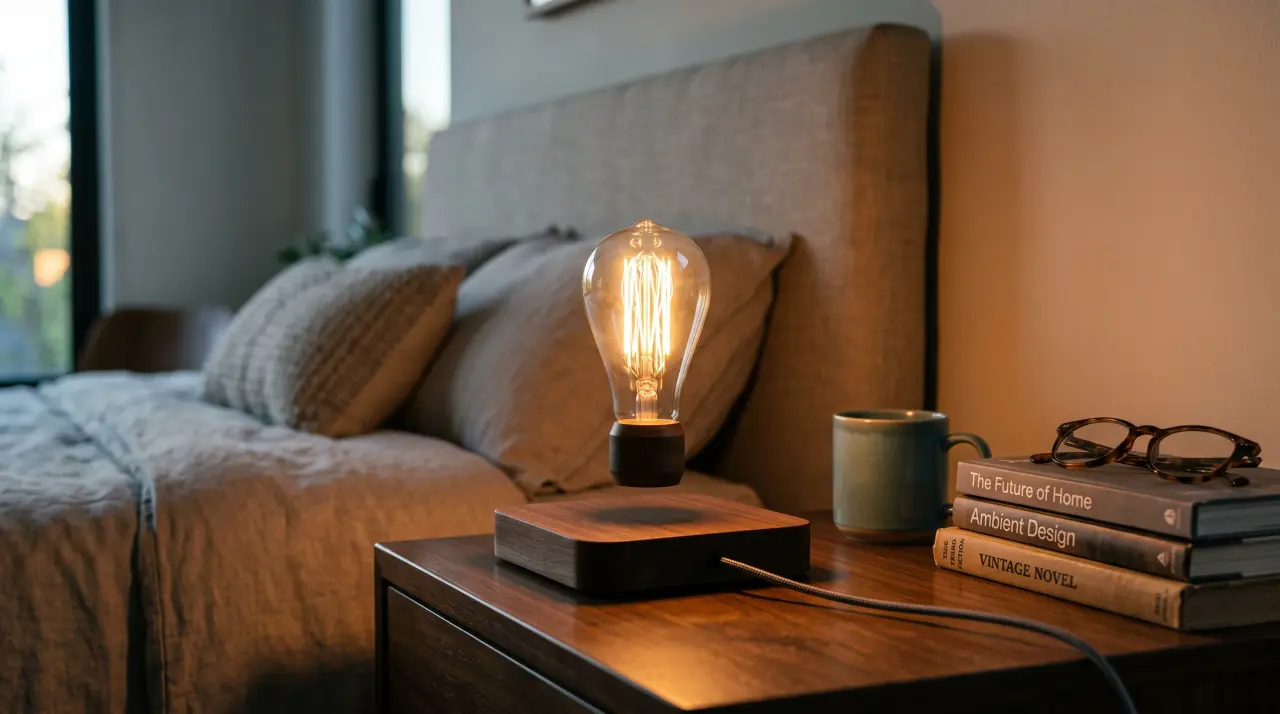
- Why it Works: The most conversation-starting ambient decor pieces are those that seem to defy the laws of physics. Levitation technology is finally becoming accessible for luxury home decor. It introduces an element of magic and futuristic wonder into everyday design. The slow, constant rotation of the floating bulb creates a incredibly calming, hypnotic visual anchor in the room.
- How to Style: Display a sleek, glowing Edison-style lightbulb or a minimalist geometric sphere literally floating in mid-air, rotating slowly with no wires attached, casting a mesmerizing, soft glow. These lamps use powerful, perfectly balanced electromagnets in the wooden or metal base to push against a magnet hidden inside the bulb, keeping it suspended. The bulb itself is powered wirelessly through magnetic induction.
✔ Acts as a breathtaking, conversation-starting piece of futuristic art in any room.
✔ The slow, silent rotation is incredibly therapeutic and relaxing to watch.
✖ The light output is very dim; it is strictly an accent piece, not a functional reading lamp.
📝 Quick Steps: Unbox the magnetic levitation base and place it on a perfectly level, sturdy surface. Plug the base into a wall outlet to activate the electromagnets. Hold the bulb perfectly centered over the base using two hands, slowly lowering it until you feel the magnetic field "catch" it. Gently let go, and watch it float and spin!
🛠️ Tools & Materials: Decor: Magnetic levitation light bulb or floating moon lamp.
🧽 Maintenance: If the power goes out, the electromagnet turns off, and the bulb will drop sharply onto the base. Ensure the base is kept clear of other hard objects that could shatter the glass bulb.
⚠️ Safety & Building Codes: Keep the powerful magnetic base at least 12 inches away from sensitive electronics, pacemakers, credit cards, or external hard drives to prevent magnetic interference and data corruption.
💡 Pro Tip: Place a levitating lamp on a minimalist entryway console table. It sets a mind-blowing, high-tech tone for your home the second guests walk through the front door.
🚧 Contractor's Insight / Structural Note: Magnetic levitation lamps must sit on a surface that is absolutely, perfectly level. If the table is slanted even two degrees, the internal magnets cannot balance properly, and the bulb will violently slam down onto the wooden base.
Shop the Look
9. Bioluminescent Living Algae Tubes (Futuristic)
Self-Sustaining Ecosystems | Eco-Friendly Biophilic Glow
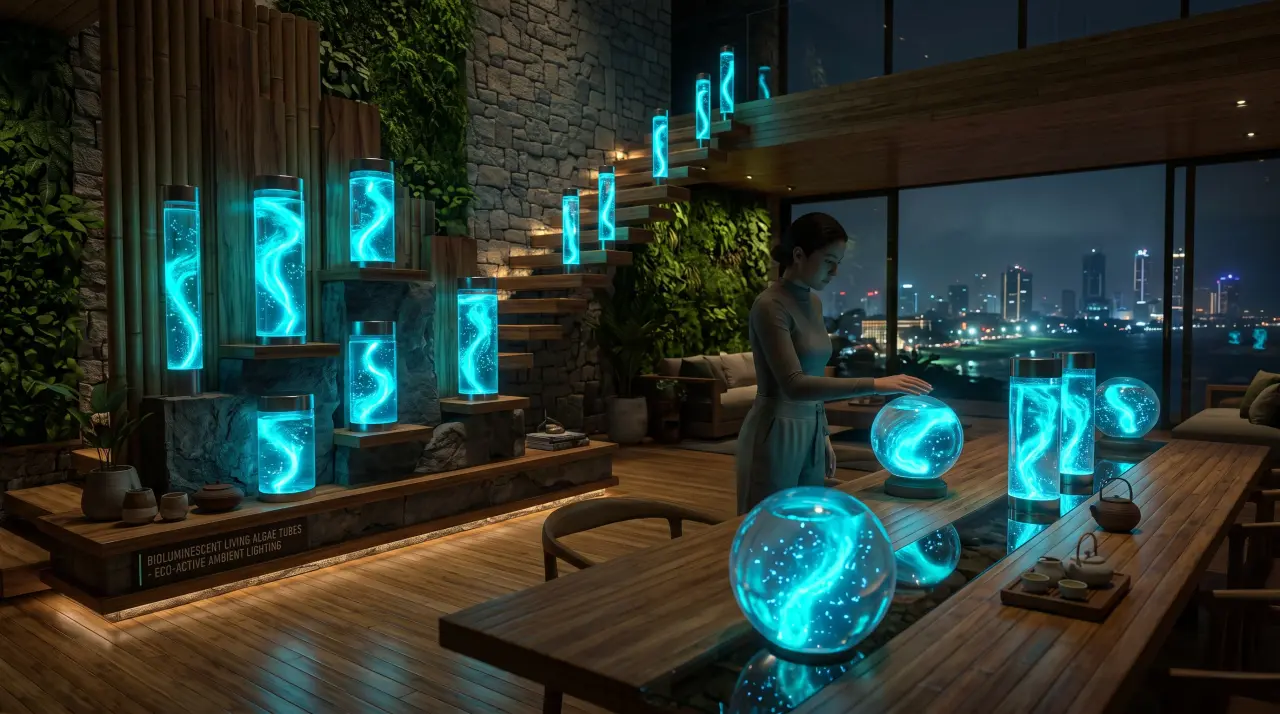
- Why it Works: As the world shifts toward hyper-sustainability, the ultimate futuristic lighting doesn't use electricity at all. It uses biology. It is the absolute pinnacle of eco-friendly, biophilic design. Having living organisms provide your ambient light connects you deeply to nature. The glow is incredibly soft and soothing, completely free of the harsh blue light emitted by artificial LEDs.
- How to Style: Showcase tall, sleek glass cylinders filled with a glowing, neon-blue or soft-green liquid that provides a mesmerizing, organic ambient light to the room. These tubes are self-contained ecosystems filled with genetically modified bioluminescent algae (similar to the organisms that make ocean waves glow at night). During the day, the algae absorb sunlight and carbon dioxide. At night, when gently agitated, they naturally emit a stunning, soft biological glow.
✔ The absolute ultimate in hyper-sustainable, zero-electricity eco-design.
✔ Provides an incredibly soothing, natural biological glow that connects you to the ocean.
✖ The algae are living organisms that require specific temperatures, sunlight, and routine care to survive.
📝 Quick Steps: Purchase a bioluminescent algae orb or tube kit from a specialized bio-design retailer. Fill the glass container with the provided specialized nutrient water. Carefully pour the living algae culture into the container. Place the container in moderate, indirect sunlight during the day. Swirl the water gently at night to activate the glowing bioluminescence!
🛠️ Tools & Materials: Botanicals: Bioluminescent algae culture, specialized nutrient water, sleek glass cylinder or orb.
🧽 Maintenance: Every few months, you must add a few drops of the specialized nutrient solution to the water to feed the algae and keep the colony healthy and glowing brightly.
⚠️ Safety & Building Codes: Do not place the glass tube in a high-traffic area where it can easily be knocked over. The algae water is harmless, but cleaning up a shattered glass ecosystem on a hardwood floor is a massive headache.
💡 Pro Tip: These biological lights thrive on routine. Place them in a spot that gets moderate indirect sunlight during the day so the algae can photosynthesize and "charge" for a brighter glow at night!
🚧 Contractor's Insight / Structural Note: Bioluminescent algae require a specific temperature range to survive (usually between 65°F and 80°F). Never place the glass tube directly over a massive heating vent or too close to a drafty winter window, or the organisms will perish.
Bonus Upgrades
- Edge-Lit Acoustic Paneling: Take your sound-absorbing wall panels to the next level by routing ultra-thin LED strips into the gaps between the wood. It creates a massive, glowing architectural feature that doubles as a high-end sound baffle.
- The Infinity Mirror Portal: Build or purchase an infinity mirror table or wall art piece. Using two-way glass and LED strips, it creates the mind-bending optical illusion of a deep, endless, glowing tunnel dropping straight into your floor or wall.
- Smart Diffused Baseboards: Replace your standard wooden baseboards with aluminum channels holding diffused RGB strips. It creates a futuristic "Tron" effect that sweeps around the entire perimeter of your room, replacing standard pathway nightlights.
- Projection-Mapped Art: Ditch standard framed posters. Use a micro-projector hidden on the ceiling to project moving, dynamic digital art (like a crackling fire or flowing liquid metal) perfectly mapped onto a blank canvas on your wall.
Quick Reference Cheat Sheet
| Feature | Best For | Estimated Cost | Professional Needed? |
|---|---|---|---|
| Bias Lighting | Reducing eye strain near TVs | $50 - $150 | No |
| Floating Furniture | Creating weightless architecture | $30 - $80 | No (DIY Friendly) |
| Plant Uplighting | Adding dramatic jungle shadows | $20 - $50 | No |
| Fiber-Optic Ceilings | Immersive, luxury starscapes | $1,000 - $3,000 | Yes (For drop ceilings) |
| Kinetic Light Walls | Interactive, moving wall art | $200 - $500 | No |
| Holographic Windows | Windowless rooms or basements | $2,000 - $5,000 | Yes |
| Electrochromic Glass | Instant privacy and soft light | $1,000 - $4,000 | Yes |
| Levitation Lamps | Futuristic conversation pieces | $80 - $200 | No |
| Bioluminescent Algae | Eco-friendly, organic glowing | $50 - $150 | No |
Frequently Asked Questions (FAQ)
DIY-friendly Projects & Tips:
Q: What color temperature is best for ambient lighting?
A: For relaxing, cozy spaces like living rooms and bedrooms, always aim for warm white light between 2700K and 3000K. Anything higher than 4000K starts to look like harsh, clinical daylight and will ruin the relaxing atmosphere of the room.
Q: How do I hide the individual "dots" on an LED strip?
A: The biggest mistake people make is leaving bare LED strips exposed. Always mount them so the light bounces off a wall or floor (indirect lighting). If the strip must be visible, place it inside an aluminum LED channel with a milky-white plastic diffuser cover to create one solid, seamless bar of light.
Q: Can I control all my ambient lighting without multiple remotes?
A: Absolutely. Invest in smart lighting ecosystems (like Philips Hue, Govee, or LIFX) that connect to your home Wi-Fi. You can control all the ambient zones simultaneously via a single smartphone app, or use voice commands through Alexa, Google Assistant, or Apple HomeKit.
Require a Pro (Professional Assistance):
Q: Can I install a fiber-optic star ceiling in a standard drywall ceiling?
A: It is incredibly difficult. You typically need to build a dropped ceiling or use specialized acoustic panels suspended below the drywall so the thousands of delicate fiber-optic strands can be routed back to the light engine without being crushed or sharply bent.
Final Thoughts
The way we illuminate our spaces is undergoing a radical, breathtaking transformation. While you can easily upgrade your home today with cinematic TV backlights or floating cabinet LEDs, it is thrilling to see what is on the horizon. The future of interior design blends technology, biology, and interactive art to create spaces that don't just look beautiful, but actually respond to us. Whether you are sticking to budget-friendly DIY strips to make your bedroom cozier, or saving up for a levitating magnetic lamp, mastering ambient light is the ultimate key to a luxurious home. Keep experimenting, stay ahead of the trends, and watch your Vindy Space shine brighter than ever!
Read Next on Vindy Space:
Shop This Post
*When you purchase through links on our site, we may earn an affiliate commission.*
Author: Vindy P.